

Internal product case study
Designing a structured cross-platform foundation for a prayer-focused digital product.
How IKECOZ approached a Flutter-based prayer application as an internal product — building screens, resolving analysis issues, and testing across browser and Android environments.
- Flutter
- Dart
- Mobile UI
- Cross-platform testing
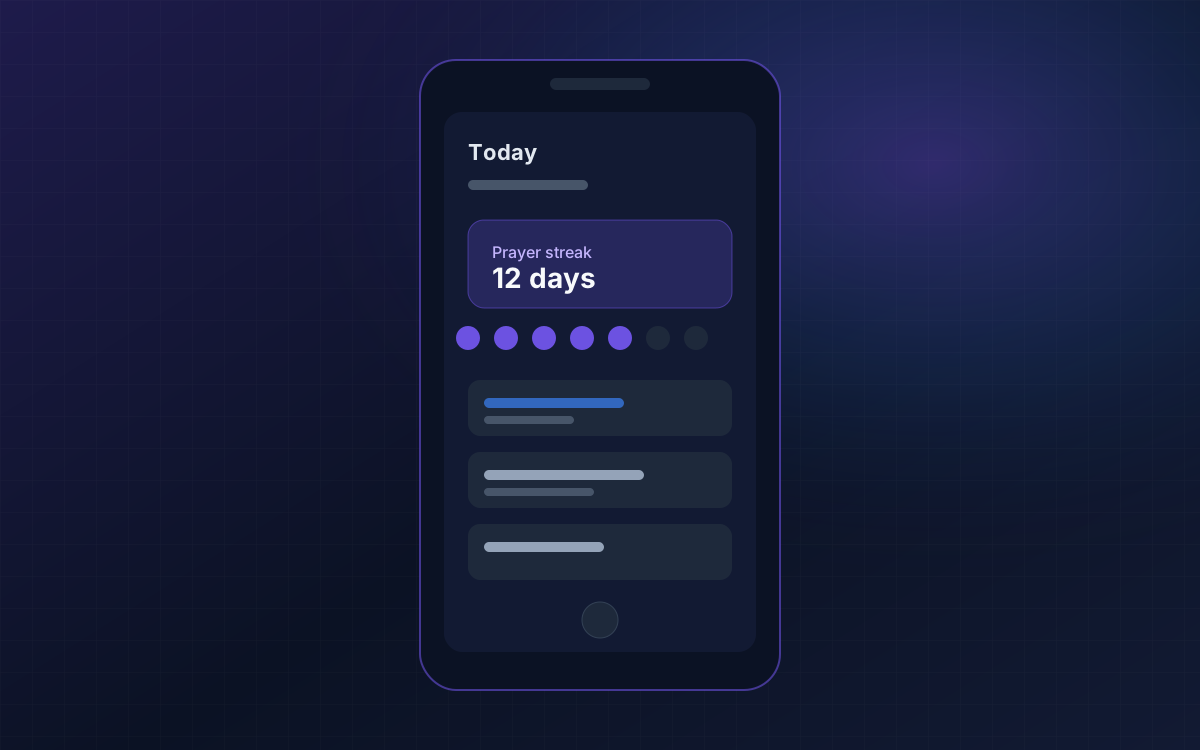
Project snapshot
At a glance.
Project snapshot
- Project type
- Internal product
- Context
- IKECOZ product development
- Status
- In active development
- Platform
- Cross-platform (Flutter — Android and web testing)
- Primary technologies
- Flutter, Dart
- Role / responsibility
- Product design and engineering
- Development model
- Iterative internal product build
- Related service areas
- Mobile apps, SaaS foundations, UI/UX, API and cloud planning
Context
Project background.
PraySync is an internal IKECOZ product effort — not a client engagement. The work explores a calm, prayer-focused mobile experience with structured navigation and reusable interface patterns. This case study documents engineering decisions, debugging, and outcomes from development records available to IKECOZ.
Challenge
The problem to solve.
Build a cross-platform prayer application foundation that remains dependable and easy to return to — while keeping scope honest about what is implemented versus what is still planned for future validation.
Goals
What the work aimed to achieve.
- Establish a maintainable Flutter project structure for iterative feature work
- Implement prayer-related screens and navigation flows
- Keep cross-platform UI consistent across testing targets
- Resolve static analysis and type issues before expanding scope
- Prepare a foundation that can grow without rewriting core patterns
Audience
Users or intended audience.
- People seeking a calm prayer and reflection companion
- Faith-centered community organizers exploring digital rhythms
- IKECOZ engineering review of cross-platform product delivery
Constraints
Boundaries that shaped decisions.
- No public store listing or verified production user base to claim
- Feature scope must stay within implemented and tested work
- Spiritual product tone must not compromise mobile usability
- Backend and authentication capabilities require separate verification before publication
Research
What was explored first.
The product direction began from observed fragmentation in how faith communities use reminders, shared prayer prompts, and engagement tools across devices. Research focused on calm interaction patterns rather than aggressive engagement mechanics.
Planning
How scope was structured.
Planning prioritized a screen-based Flutter structure with reusable components, clear navigation hierarchy, and incremental feature validation rather than a large upfront feature list.
Experience design
Interface and experience direction.
Interface work emphasized readable hierarchy, touch-friendly layouts, and screen-to-screen progression suited to reflective use. Visual noise was intentionally restrained.
Technical approach
How the work was engineered.
PraySync was built with Flutter and Dart for cross-platform delivery. Development included implementing multiple user-interface screens and flows, running the application in Chrome for web-oriented testing, and exercising builds on Android (including Android 15, API 35). Static analysis was used as a quality gate — issues were resolved until the project achieved a clean Flutter analysis result.
Architecture
Verified application structure
Based on the implemented Flutter client work. Backend services such as authentication or cloud data are not shown unless separately verified for production use.
- Flutter client: Cross-platform UI, screens, and navigation
- Screen layer: Prayer flows, journey screens, reusable widgets
- Static analysis: Dart analyzer and test feedback loop
Development process
How the work progressed.
Development process
- 01Set up the Flutter project and core navigation structure
- 02Implement prayer-related screens and interface flows
- 03Run and test on Chrome and Android devices
- 04Address analyzer warnings and failing tests
- 05Re-run analysis to confirm a clean project state
- 06Document patterns for the next development iteration
Important features
What was implemented or validated.
Important features
- Cross-platform Flutter application structure
- Prayer-oriented user-interface screens and flows
- Navigation patterns designed for returning users
- Reusable widget composition for iterative development
- Browser and Android testing paths during development
Challenges and debugging
What failed, how it was investigated, and what changed.
Challenges and debugging
Type mismatch in streak journey screen test
- Challenge
- A test involving the streak journey screen failed because a value did not match the expected type contract.
- Response
- The component contract and test data were reviewed together. The mismatch was corrected, tests were rerun, and Flutter analysis was executed again to confirm the project was clean.
Cross-platform layout consistency
- Challenge
- Screen layouts needed to remain readable across browser testing and Android form factors without diverging into separate code paths too early.
- Response
- Shared widget patterns and restrained layout rules were favored over device-specific exceptions during this foundation phase.
Testing
How behaviour was validated.
Testing combined Flutter static analysis, targeted widget tests, and manual runs on Chrome and Android. The goal was to confirm that implemented screens behaved predictably before claiming broader product readiness.
Outcome
Honest project outcomes.
Outcome
- A working Flutter development foundation was established
- Key prayer-related screens and navigation flows were implemented
- Static analysis issues were resolved to a clean analyzer result
- Cross-platform testing paths were exercised on browser and Android
- The product is prepared for further development and validation
Lessons learned
What the work reinforced.
Lessons learned
- Analyzer cleanliness is a practical gate before feature expansion
- Type contracts between screens and tests should be updated together
- Calm spiritual products benefit from visual restraint in early UI foundations
- Honest status labeling matters more than premature launch language
Current status
Where the project stands today.
PraySync remains an internal product in active development. It has been tested in development environments on Chrome and Android. This site does not claim an app-store release or verified production usage.
Future improvements
Possible next steps — not completed features.
Future improvements
- Validate community-oriented features with careful scope control
- Confirm authentication and backend architecture before production claims
- Expand accessibility testing across devices
- Prepare packaging and distribution when release readiness is confirmed
- Add structured integration tests for critical user journeys
Related services
Delivery capabilities connected to this work.
Related services
Mobile Apps
Cross-platform mobile applications that feel reliable in daily use — not just impressive in a demo.
SaaS
SaaS foundations designed for multi-user access, iteration speed, and growth — without overbuilding the first version.
UI/UX Design
Product design focused on clarity, trust, and completion — so users understand what to do next.
API & Cloud
APIs, integrations, and cloud foundations that keep products connected, secure, and ready to grow.
FAQ
Questions about the PraySync case study.
Honest answers about context, status, and availability.
Frequently asked questions
Have a software problem worth solving?
Share your idea, existing system, users, constraints, and desired outcome with IKECOZ.